
Our Mission:
To catalyze socio-economic change in India through the education of underprivileged children.
Asha Austin 2021: Year in Numbers
4700+
Children Impacted
9
Projects Supported
100+
Teachers+Staff Supported
$218K+
Funds Disbursed
3
Emergency Relief Efforts
7
States Supported
$255k+
Funds Raised
2500+
Volunteer Hours
Asha Austin is a non-profit organization. It is a completely volunteer driven organization, comprising of dedicated individuals from Austin, striving to make a difference to the society. We believe that education is one of the primary factors in shaping a child’s future and by extension, future of the entire country.
We work towards promoting the education of underprivileged children in India by providing financial assistance and support to the NGOs focused on education projects. Volunteers of Asha work closely with the project partners in India, while locally organizing fundraisers and community awareness events.
You can join our efforts by donating, joining as a volunteer, or applying for funding from Asha. For more information on Asha Austin or how to join the cause, feel free to contact us!
Snapshots of Current Projects
Gramin Shiksha Kendra Samiti
Traditional education does not seem to lead anywhere for agrarian communities – it does not provide meaningful employment and the educated person is useless to extant agrarian patterns. Uday aims to bring relevance into education.
Gramin Shiksha Kendra aims to address this issue of quality squarely and provide an option that is easily adaptable and implement-able in the government school sphere. The first element is in developing a truly community led and owned school. A school where the community has a major say in deciding what is taught and where the children do not get alienated from the rural area as a result of education.
KHUSHBOO WELFARE SOCIETY
A center for children with mental and multiple disabilities, provides special education, vocational training, therapeutic assistance, and early intervention programs.
Asha-Austin supports ~70% of the salaries associated with these new initiatives staff, and is about ~10% of Khushboo’s operational needs. Asha-Austin, knowing as to how important, it is for an organization to retain its dedicated staff, especially teachers, decided to fund this project towards remuneration of salaries.
Mathru Foundation
Arjuna Awardee and Padmasree Malathi Krishnamurthy Holla, afflicted by polio at infancy started Mathru Foundation to serve the physically challenged with Motherly care. Asha for Education is supporting the daily needs of the school such as salaries of the support staff, food and living expenses of the children.
VIKASA TARANGINI – NETHRA VIDYALAYA
Nethra Vidyalaya is a residential school for the visually challenged children in and around Vishakapatnam. Asha provides support to this school by funding teachers’ salaries and for providing food, accomidation, education and primary healthcare to our students. We require resources for teaching nine areas of the expanded core curriculum: Compensatory, Sensory efficiency, Assistive Technology, Independent living, social Skills, Orientation & mobility, Career education, Recreation & leisure and Self-determination.
ASHA TRUST – NAVJYOTI SWAWALAMBAN SEWA SANSTHAN
The organization provides primary education in 2 main centers and non-formal education in about 10 centers including 6 kishori kendras and more than 30 self help groups in eastern Uttar Pradesh. The organization also runs vocational training centers and supports various social causes. Asha Chicago provides support for teachers’ salaries, training and school supplies.
ASHA TRUST – SANGAMAM RAJATALAB
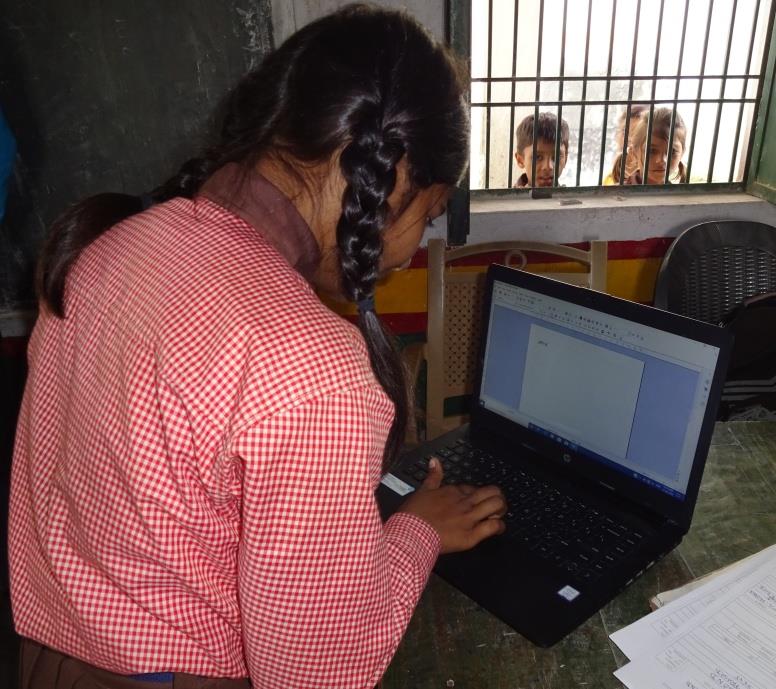
Sangamam project focusses on teaching computer science to government primary school children in Rajatalab, Varanasi area in Uttar Pradesh, India. In addition, the project aims to supplement the teaching of other subjects like Maths, Science, English etc. Though initial focus will be on teaching computer science, the hope is that the teachers will also start mapping online teaching content UP state board curriculum.
GANJAM DISTRICT ORTHOPAEDICALLY HANDICAPPED WELFARE ASSOCIATION
Project Samarth’s (formerly GDOHWA – Ganjam District Orthopaedically Handicapped Welfare Association) goals are:
- To help children with physical deformity ascertain his/her rights.
- To educate parents, family members and the community to make the surroundings of the partially able conducive for his/her easy socializing.
- To help them overcome discrimination and gain social support and respect.
- To provide them education up to 5th standard
- To help them get training on various vocations, so that they become self employed and self dependent
- To aware the community about the utility of education and bring their participation in developing educational standard of the villages.
- To create opportunity for the eligible children with disabilities to use their potential to successfully complete the standard of primary education.
ANTYODOY ANATH ASHRAM PAUSHI – KHAGENDRA SISHU SIKSHA KENDRA (AAA-KSSK)
KSSK is a free primary school in Paushi village in WB, India, catering to children aged 4-12 from the ashram, and poor families in surrounding villages. Asha for Educations’ monetary assistance to KSSK can help the school to continue to provide a holistic learning environment free of cost for these children. The funding will support the salaries/honorarium of teachers and staff, school supplies, transportation for students, electricity and telephone line, and annual administrative expenditures.
Fellowship Siddamma
Siddamma is working on creating a community resource center to document community based knowledge and provide a base for communities to test eco-friendly alternatives in agriculture, pottery, dairy, herbs and energy.
The resource center does not only serve as a laboratory for the villages, but also provides an opportunity to learn what we should be teaching our children. The center would double up as a fulltime school for children who have dropped out from the regular schooling system and can benefit from alternative education and vocational skills.
Join our volunteer meetings!
Dial-in & Screen Share or Review our Meeting Minutes
Want to keep up with the latest Asha Austin news?
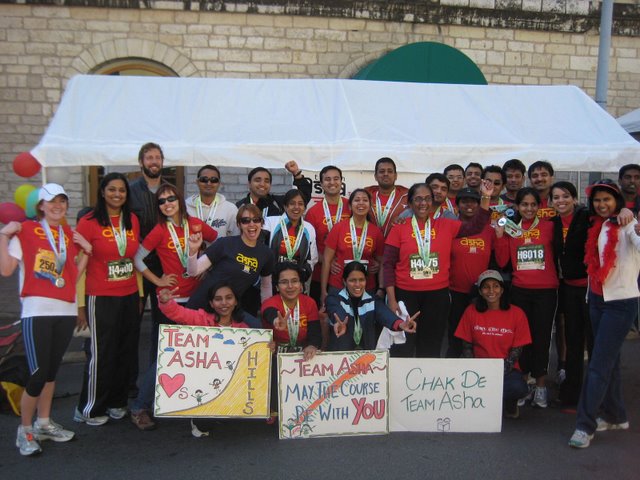
Check out our Austin Chapter Facebook page or the Team Asha Facebook page
ASHA FOR EDUCATION IS A 501(C)(3) NON-PROFIT ORGANIZATION. FEDERAL TAX ID#: EIN 77-0459884 (All donations made to this organization are tax-deductible in US.)