Asha Chetna

To light up the torch of inspiration by burning the oil of diligence, To pledge a life for education by extinguishing the wick of ignorance. - Sukriti Dewan

It can Take a Child to Raise a Village - Bella Satra


The Navjyoti project, in the Nagepur Village in Varanasi, although focused on the welfare of at-risk children, undoubtedly affects the community at large in positive ways that go beyond simply giving a chance to the youngest generation that is the future of India.

Women at Navjyoti - Mahesh Vemula


From being confined to their homes to being elected to the local panchayat, the women of Navjyoti have come a long way through education, financial independence and self-confidence.

Women Self-Help Groups - Deepam Patel


The SHGs at Navjyoti have become an integral part of the overall project. They help the women become more self-sufficient and financially independent.

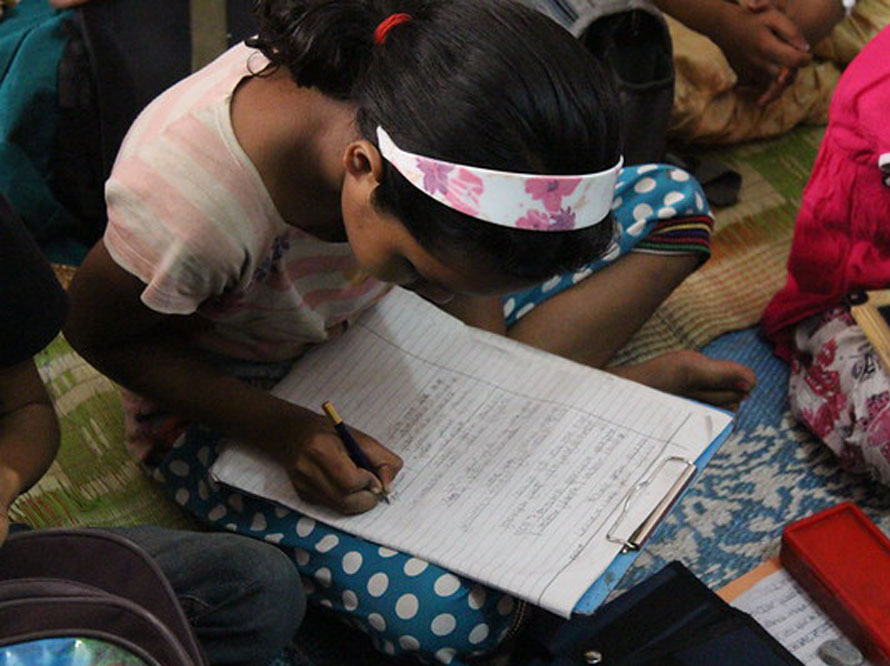
From the Notepad of a Child - The Children of Navjyoti


On a site visit to Navjyoti, an Asha Chicago volunteer had the chance to interact with the children and ask them to pen down their thoughts on varied subjects like education, social work and ambitions. Here are some of their notes; unedited and straight from the heart.

The Bees and the Ants - Sukriti Dewan


When Asha Chicago was born as a chapter, the seeds of communication between two diligent organizational structures were sowed. The buzzing city volunteers - the bees and the assiduous grass-root mentors and mentees - the ants.

The Crossword - Vanita Negandhi


  • It can Take a Child to Raise a Village

    Bella Satra

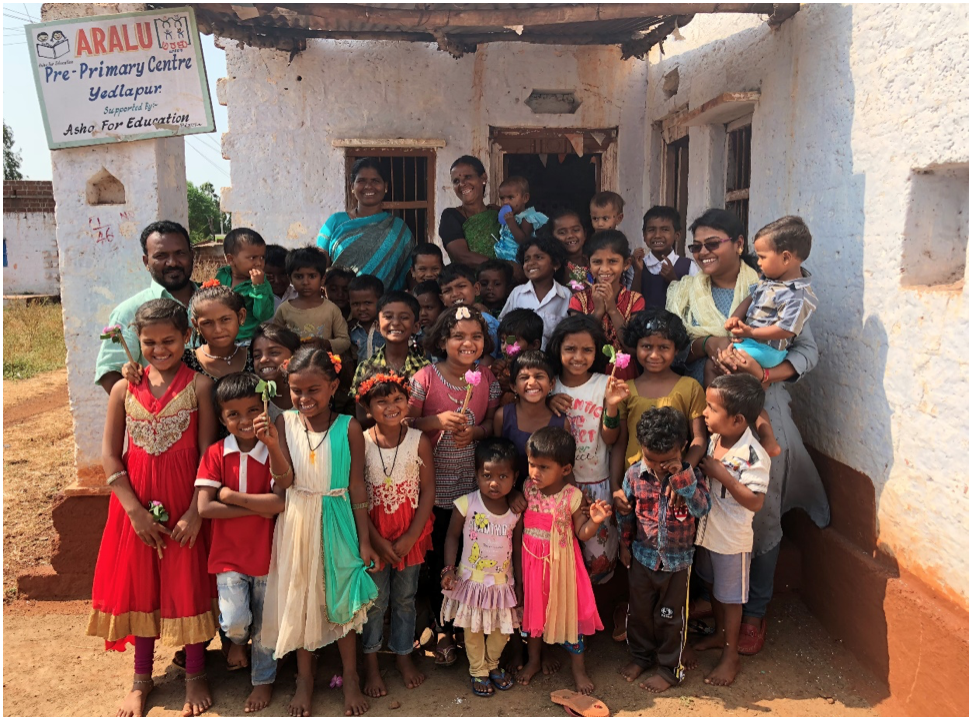
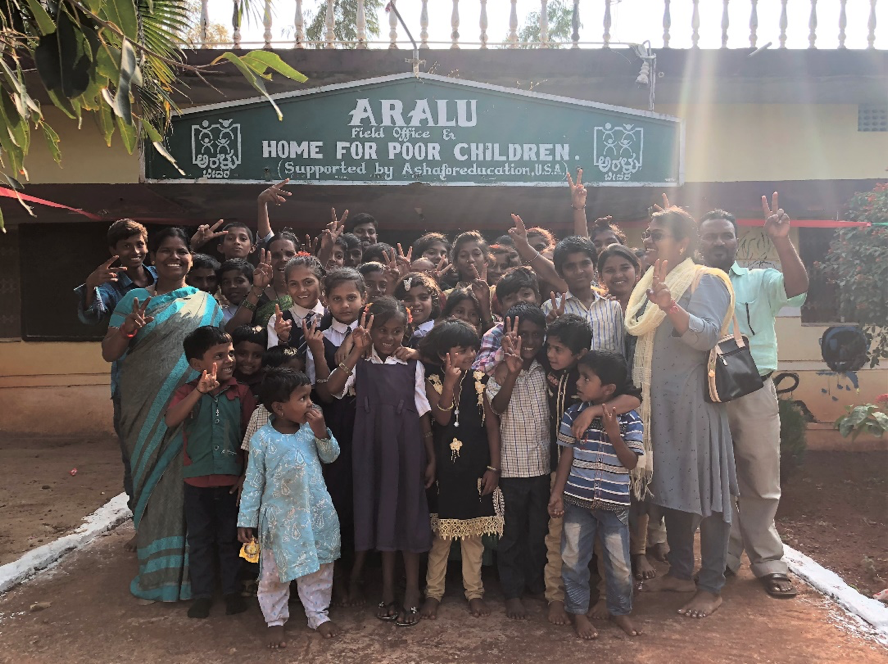
The African proverb, "It takes a village to raise a child," essentially means that a child's well-being and growth depend on his community. However, for the children growing up in Kamthana and Yedlapur, Karnataka, or Naugarh, Uttar Pradesh or in any one of the many villages supported by Asha's education initiatives, it can also take a child to help raise the village out of the depths of poverty and into social and economic empowerment. Thus, Asha's efforts, although focused on the welfare of at-risk children, undoubtedly affect the community at large in positive ways that go beyond simply giving a chance to the youngest generation that is the future of India. Due to the great generosity of our donors and supporters, Asha is able to bring hope to children and their communities alike.

The Navjyoti project, in the Nagepur Village in Varanasi, is one such example of progress where the community has developed in large part because of the broad initiatives to educate the peoples, not just the children, of that community. This community manufactures the famed Benarasi silk saris that will eventually retail for thousands of rupees, yet these revenues do not trickle down to give the laborers a standard of living commensurate with India's middle class. With nimble fingers, young children deftly work the silk threads into fabric on wooden looms in small mud-thatched huts while an adult operator performs the final steps to create the fabric. These children start out as apprentices and may eventually become operators but, at a rate of pennies per day, they are paid far less than the operators. Families in the area, plagued by poverty, often have no choice but to send their children to work the looms instead of sending them to school. While there are some government schools in the area, most families cannot forgo income for regular education and girls are at a still greater risk of receiving almost no classroom time at all.

With humble beginnings of just an evening school program that began in 1994, the Navjyoti Education project, coupled with Asha funding and support, has blossomed into more than 11 centers of learning in the surrounding villages to educate more than 400 children and provide support for many other projects to help empower the community. Navjyoti itself runs many projects including formal education for children, informal education initiatives, sewing centers, self-help groups, the water rights movement, and a street theater group. While Asha lends financial support primarily for children in the spirit of education and empowerment, that guiding philosophy is transforming the community as well.

Founder and coordinator of Navjyoti, Nandlal Master exemplifies the Asha spirit of inspiring hope through education. Born into a sari-weaving family in Usrapatti Village, Varanasi, Nandlalbhai's family fell on difficult financial times; he was compelled to return home from college in order to help his family out. Upon seeing his younger brothers working as weavers in other people's homes, he felt moved to help out the child laborers of his village. He began by offering evening classes to children so that they could at least receive some education without sacrificing hours during the day spent weaving. Nandlalbhai also built up a team of volunteers, comprised of students from the area college. With Nandlalbhai at the helm, the team expanded their class offerings and Nandlalbhai eventually formed the Navjyoti organization to educate the children working in sari weaving.

Affectionately called 'Masterji,' Nandlalbhai has captured the hearts and minds of the children that he works with through Navjyoti. Despite holding classes in poorly heated mud thatched huts by the light of a dim gas lamp, the children are enthusiastic and eager to learn. Even at such a young age, they are aware of their precarious roles in the financial well-being of their families. Many of these children are the only members of their family who can read or write. Thus, their families rely on them in ways that we would ordinarily take for granted. If information is power, for the families who can barely meke out a living, having at least one member of the family who can read and write means that they will not always fall prey to making deleterious decisions, like for example, wage and labor agreements. More importantly, considering that many of the children attending Navjyoti are also the first generation in their families to receive any schooling, and the children themselves are eager to learn, instilling a sense of hope and pride at this stage will also help to encourage the education of the next generation.

Young women and girls are particularly at risk for receiving practically no education at all. The demands of helping to run a house, earning a living, and the eventual demands of marriage, often at a young age, mean that they are unlikely to achieve any sense of independence unless they are given an opportunity earlier. As part of the Asha-supported initiative, Navjyoti runs a curriculum for girls to learn sewing, which not only teaches a marketable skill but also inspires confidence. They are also taught basic education skills including reading, writing, and math and they too realize the value of this. They are acutely aware that such knowledge will help them become self-reliant and sustain an income. Having such basic skills will allow them, for example, to understand and sign legal documents. Having basic arithmetic skills will help them manage their earnings once they start working as seamstresses.

While Asha provides financial support for these activities, the effects are much broader. The sense of empowerment created at the individual level has coalesced into a broader effort to empower women. Navjyoti offers assistance, meeting space and logistical help for independently run women's self-help groups designed to protect them from predatory lending and to offer support for each other. These groups consist of about 30 women who deposit money each month into a bank account from which they can also withdraw funds, thus they can avoid falling into debt to commercial lenders. They also elect officers to manage the group and hold regular discussions about various topics including domestic issues. As a result, these groups become sources of both financial and moral support that serve to empower women. The value of these groups stems from the fact that the women are learning by doing while Navjyoti merely operates in the background to facilitate their efforts.

While most of the funding sent to programs like Navjyoti go towards teachers' salaries, classroom supplies and basic necessities like school lunches, the visibility of Navjyoti's work in the community only serves to garner more goodwill and support for their efforts. Shifting from voluntary teachers to salaried teachers creates an incentive for the locally educated to help out in the community, and they in turn take on other projects like assisting the self-help groups. Funds used to construct and maintain buildings allow those buildings to be used as classroom space and meeting space for coordination efforts for community-based initiatives like right-to-information meetings, the water rights campaign and the campaign against a multinational's allegedly illegal dumping and use of land. Your donations to Asha serve the "dual uses" of empowering not only children, but also their communities. Asha-supported programs like Navjyoti demonstrate that the dedication and compassion of visionaries like Nandlal Master and his staff can truly lift people out of destitution by offering them the opportunity to become more than just victims of circumstance. By offering your financial and moral support to the education of impoverished children, you simultaneously offer hope and empowerment to the community.

Back to top

  • Women at Navjyoti

    Mahesh Vemula

"The history of woman is the history of the continued and universal oppression of one sex by the other. The emancipation of woman is her restoration to equal rights and privileges with man". Beyond a doubt any nation or society can develop only when both men and women stand on an equal footing. Navjyoti Swawalamban Sewa Sansthan (NJSSS), an Asha Chicago supported project strives to achieve this goal by going beyond providing primary education to unprivileged children and concentrating also on empowering women and emancipating them from violence and inequality.

NJSSS provides primary education in 2 main centers in UP at Nagepur and Harsos. Another important chapter of the NJSSS is its Kishori Kendra. NJSSS has 6 Kishori Kendras, at Benipur, Kallipur, Mediganj, Bhimchandi, Harsos and Nagepur. Currently there are a total of 165 girls that attend these centers. These centers provide education and guidance to the adolescent girls (Kishoris) whose average age is around 15, most of which have never had any kind of schooling or education. These centers aim to provide basic reading and writing skills to these girls along with other vocational skills such as sewing. Apart from these Kishori Kendras, NJSSS also provides education to the Women's Sewing Center at Benipur as well as providing both educational and financial support to the sewing center at Mehdiganj. Some of these Kishoris need advice on matters related to heath care and it is actively provided by the NJSSS volunteers Shrimati Urmila Patelji and Shrimati Urmila Vishwakarmaji. At the primary education centers at Nagepur and Harsos, the children take part in recreational activities on Saturdays. For example the children participate in debates and discussions focusing on social economic issues such as dowry and caste. Apart from their day to day activities, these women are given the opportunity to visit nearby cultural and historical places planned by the NJSSS to expose them to other forms of education.

Often, the NJSSS promote events in which people from Varanasi and other nearby cities come together and disseminate information on various matters pertaining to health and welfare of the society. One event that was conducted on 16 Jan 2006, hosted by Shrimati Ranjana Gaudji, Shrimati ANM Asha Singhji from Varanasi and Shrimati Richa Patelji discussed issues such as domestic violence and pregnancy. Through these lectures the women are able to build their confidence that in turn allows them to realize their equal rights and status in society.

Goals of the NJSSS related to women's rights are as follows:
(a) To provide equal rights to all women per the Constitution of India.
(b) To eradicate the evils prevalent in the society through unity among all women.
(c) To encourage the participation of women in the Panchayat Raj governance.
(d) To fight all forms of violence against women through Gandhian principles.
(e) To provide the same rights that men have, for women in society.

Another interesting aspect of the NJSSS is the self-help group (SHG) program. The SHG groups provide micro-financial and advisory services to their members on multitude of issues related to family matters and property. Essentially, the women belonging to the community run these groups. These groups have empowered women financially and socially. The NJSSS organization helps arrange marriages that have the consent of the families of both the bride and the groom. Marriages are usually conducted in large group ceremonies without a dowry and at a minimal cost to the families. Nandlal Master, a grassroots activist at NJSSS and an Asha fellow has been instrumental in creating awareness among the women about dowry. He tries to instill awareness that marriage is not a business and life partner who has been bought should not acceptable to a woman. He has also encouraged several women to participate in the Panchayat elections. As a result Mrs. Urmila was elected as a Panchayat member at Benipur proving the progress in this community.

There was a time when women of these regions were confined to their homes, but now these very women have very active roles in the development and growth of an educated society. Women in these districts can now be heard voicing their opinions and asserting their rights. While, the journey is still long, a milestone has been reached.

Back to top

  • Women Self-Help Groups

    Deepam Patel

Navjyoti Swawalamban Sewa Sansthan is an Asha Chicago supported project in the Varanasi district of Uttar Pradesh. Navjyoti began when Nandlal Master, a grassroots activist from the area, upon completing his education, returned to his village and started evening classes for his cousins who worked on the Benarasi sari looms during the day. (Navjyoti began when Nandlal Master, a grassroots activist from the area started evening classes for his cousins who worked on the Benarasi sari looms during the day.) Today Navjyoti has become a grassroots community based movement tackling diverse human rights issues through education (defined liberally).

The organization runs permanent schools, non-formal education centers, Kishori Kendra centers for young girls, sewing centers for older women, and self help groups (SHG) for the women in these villages; all of which are directly funded by Asha Chicago. In addition, Navjyoti runs a Kalamanch (street theatre) group, holds frequent RTI (Right to Information)/RTF (Right to Food) camps, health camps, and has built a major grassroots protest against a local Coca-Cola plant through Lok Samiti, a people's movements group. In December 2007, I had the opportunity to spend some time at Navjyoti. In particular, I was able to attend a few SHG meetings. These SHGs reflect an interesting mix of Grameen type microfinance ideology and a certain people's ideology based on the Gandhian philosophy.

In its most naive format, an SHG consists of a group of men or women who come together to save and/or borrow money as a group. The group then decides how to use the loan or the savings. The lending institution could be a bank, a government subsidy, an NGO, or the members of the group themselves. These lead to different models of SHGs. Currently, the area around Navjyoti has 3 types of models in place.

Many banks offer commissions to start an SHG, which then creates an account with the sponsoring bank. Furthermore, banks offer incentives to the groups themselves through low interest loans. Also, there are government programs, which offer subsidized loans to SHGs and offer monetary incentives to NGOs that form SHGs under such government programs. Unfortunately, both of these models have serious drawbacks. The monetary incentives have led NGOs to create SHGs at a blistering pace. Without adequate guidance these SHGs fall apart quickly or become indebted to the lending institution.

The SHGs administered by Navjyoti are distinct from the ones mentioned above. Closer to the Grameen philosophy, the emphasis is much more on the people and self-sustenance. A typical Navjyoti SHG consists of 10-30 members. When a group is formed, the group members elect a president, a secretary and a cashier. The duration of the group (2-5 years) is fixed, at the end of which all accounts are cleared and the group starts over again. At the inception, a monthly deposit amount (approx.Rs.25-100) and the interest rate for loans is fixed by the group members (based on the poorest group members). A designated group member keeps the savings of the group. Some of the money is kept in an emergency fund; the rest is available for loans should some members require them. There are currently over 30 female SHG groups and 3 male SHG groups administered by Navjyoti, some operating since 1996.

The monthly SHG meetings generally occur at a public place in the village or a group member's house. For e.g., one of the meetings I attended took place on the roof-top of a member's house. The meeting began with the Navjyoti coordinator checking the accounts register and reviewing loan activities for the month. One of the coordinator's roles is to make sure that accounts are maintained regularly. Usually, loans are administered during the monthly group meetings. But, if a member has an emergency or requires a quick loan between meetings, s/he can talk to the secretary or president of the group. The group will then meet and decide whether or not to administer the loan. Members borrow money for various reasons including health, medicines, weddings, travel, and investments in their farms. Some women have borrowed money to start small entrepreneurial activities such as selling vegetables or making small artifacts. Many families have borrowed money to buy their own sari looms. The last type of loan has been particularly successful as it makes the family less dependent on the mahajans. These activities have been highly successful in making families and especially women economically independent. Villagers not necessarily members of the SHG are also eligible to receive loans. Finally, if a group has insufficient funds for a loan then it may apply via the Navjyoti coordinator for a loan form another Navjyoti group.

The loan re-payment period is upto one year. If a member is unable to re-pay a loan on time then s/he is given an opportunity to explain the reason for default to the group. The group then decides on an extension or a forgoing of interest. Till date, there has not been a single default among the women SHGs at Navjyoti although some have been late. This leniency afforded by the Navjyoti groups is another advantage over the other two types of SHGs mentioned above. The Navjyoti groups are not dependent or indebted to outside sources such as banks or governments, who sometimes take the role of a money-lender (albeit more benevolent). Such groups give the poor in these villages access to credit without having to resort to money-lenders who charge exorbitant interest rates.

Once the accounts have been checked, funds deposited, and loans disbursed, the second half of the meeting begins. In general, the second part of the meeting is used to discuss various domestic as well as social issues facing the members of the group like dowry disputes, land disputes and domestic violence. In such cases, the Navjyoti coordinator acts as a mediator between the polarized parties. For e.g., at one of the group meetings I attended, a villager had requested the Navjyoti coordinator's help/advice in a property dispute with her neighbor whom she accused of encroaching on her land. These meetings are also used to discuss the rights of the members as citizens of India. For example, recently under the National Rural Employment Guarantee Act (NREGA) certain villagers are guaranteed 100 days of employment. Under the provisions of the act, at least 1/3 of these should be women. But, through the RTI/RTF efforts of its members, Navjyoti has learned that there are very few women on the lists of villagers eligible for employment through this act. Therefore, currently the coordinators are focusing on helping these women get employment cards under this act. In the past, the groups have been used to help women get ration cards and pension cards. These added activities and the continuous support by the Navjyoti coordinator have helped in the formation of long term SHGs, in contrast to the first two types of SHGs discussed.

The SHGs at Navjyoti have become an integral part of the overall project. They help the women become more self-sufficient and financially independent. This in turn builds their confidence which eventually leads to less domestic violence. Furthermore, as these women earn more money they are able to send their children to school which helps decrease child labor. Ultimately these group end up going beyond mere credit creating institutions, becoming tools for social change.

Back to top

  • From the Notepad of a Child

    The Children of Navjyoti

    Translated & Illustrated by Vanita Negandhi

On a site visit to Navjyoti, an Asha Chicago volunteer had the chance to interact with the children and ask them to pen down their thoughts on varied subjects like education, social work and ambitions. Here are some of their notes; unedited and straight from the heart.

WHY DO YOU THINK EDUCATION IS IMPORTANT?

Name - *
Class - 3
School - *

By studying we learn how to do our work (efficiently) and how to do basic math calculations. We learn how to farm and we can also become doctors. By studying we can get a job or we can become farmers. We can even become police officers. (Ultimately) we learn to become good human beings.

Name - *
Class - 3
School - *

By studying we can get a job (and) education. We also gain knowledge, which is why we come here to study. By studying we can learn to do basic calculations. If someone writes something we are able to read it (and understand). We can become doctors by studying. We educate ourselves so we can educate others. We will study and become teachers. If we get lost then we can ask for directions and come home.

WHAT DO YOU MEAN BY SOCIAL WORK?

Name - *
Class - 4
School - *
Date - 16/12/2007

The people who strive to conserve water are social workers. Those who work (to uplift) society (are called social-workers) like Gandhiji, the father of our nation, was a social-worker. Those who study and work (for society), but there are some who talk (but don't do anything) and that is not social work. Those who fight for the country can be called social-workers. Gandhiji used to do social work by being truthful and non-violent.

* - Names withheld

Back to top

  • The Bees and the Ants

    Sukriti Dewan

When Asha Chicago was born as a chapter, the seeds of communication between two diligent organizational structures were sowed. The buzzing city volunteers - the bees and the assiduous grass-root mentors and mentees - the ants. It all started on a fine sunny day when a bee decided to visit the ant colony. As the bee flew to several rustic ant colonies, the bee was really sad to see the ants prodding along, lifting weights more than their own body masses to support their colony. Such was the day, when the bee decided to help the ants get wings - Wings of Education! The bee decided if there was a way to help empower the ants, it had to be through education. The bee flew back 7,500 miles to Chicago land and told all about the ant colony to the fellow bees in the hive. No sooner was it said, and the bees started buzzing around, opening portals of communication across 7,500 miles, to know their native fellow ant mates. Thus, the ants and bees started to peek into each others world.

After many conversations between ants and bees, the ant representative sent the bees a simplistic synopsis of their proposed plan of action:
Education = School + Community Development
School = Premises + Teachers + Children
Premises = Monthly rent
Recruiting Teachers = Salary
Recruiting children = books + food + employment (so they could continue supporting their family)

The bees pondered about the plan and thought a lot. They figured a plan of their own to share the burden of the ants:
Immediate help = money to open school = fundraisers
Long- term help = empowerment of society = awareness + vocational trainings

Having set the broad goals in place, the bees held meetings on cold frosty days of Chicago, and brainstormed about the ant world. With these goals in mind the bees quickly devised a strategic team structure for them to work, wherein each team worked synchronously with every other team. Hence the following team roles and responsibilities were charted:
Asha Chicago Chapter co-ordinators: The Master bees who overlook all the bees activity and gives them direction.
Asha Chicago Project stewards and co-ordinators : The Monitoring bees who talk to the ants, understand their needs and problems, help them to sort these out and help disburse the collected funds to the ants.
Asha Chicago Team Asha co-ordinators and Mentors: The Fundraising and Running bees who recruit more bees to raise funds by buzzing at full speeds at marathons.
Asha Chicago Treasurer: The Finance logging bees who maintain records of all finances and funds collected and disbursed.
Asha Chicago Webmasters: The Connecting bees who create webs for all bees to communicate, raise funds and work efficiently.
Asha Chicago Awareness Squad: The networking, designing and writing bees who spread awareness amongst other city dwelling species about the Wings of Education.
Asha Chicago Buzzing Bees Team: All the bees who help the other bees with the remaining activities.

The ants, having received so much support from the bees continued their efforts towards education and empowerment with renewed energies. The ants worked very hard to teach and support little underprivileged children. The ants worked rigorously at running and setting-up Day-care centers (Anganwadis) for younger kids, Elementary and high schools for teenagers, Vocational training centers for young women (Kishori Kendras), Education centers for disabled and challenged kids, Women empowerment groups (SHGs), evening schools for kids, small Microfinance units for self-sustainiability, Gym centers for young men, Art productions (Bal-mela) and Theatrical productions by children (Kalamanch), Right To Information (RTI) workshops, computer training workshops and Water rights movements amongst many other activities.

Today when a bee visits the ant colony, it wonders in awe at the action and the transformation in the ant colonies. It is a very humbling and the motivating experience for the bees. As the growth in the ant colonies continues in the direction of Wings of Education, so does the bee hive continues to grow in sync with the ants. While, truly the merging of these two apparently different species as one is a remarkable feat in itself, the fruits of their symbiotic association have helped both the bees and the ants. To continue helping the ants grow the Wings of education, we urge everyone to enter this bee hive and share this journey with us.

Back to top

  • The Asha Crossword

    Vanita Negandhi

ACROSS

1. The place where marathons originated.
2. Asha-Chicago supports this pre-primary day-care center in Karnataka.
3. The place where Asha was born.
4. A project supported by Asha-Chicago that focuses on slow learners.
5. A grassroots worker and recipient of the 2002 Asha fellowship.

DOWN

1. This project focuses on non-formal education centers and self-help groups in eastern Uttar Pradesh.
2. Gramya deals with teaching tribal children who are deprived of education and promoting general awareness in this town.
3. Contribute one hour of your time towards the cause of children's education through this event.

ACROSS
1. Marathon  2. Aralu  3. Berkeley  4. Asmita  5. Siddamma

DOWN
1. Navjyoti  2. Varanasi  3. WAH

Back to top

Chicago Downtown Panorama