
Society for Educational Exploration - Sita School
Society for Educational Exploration - Sita School
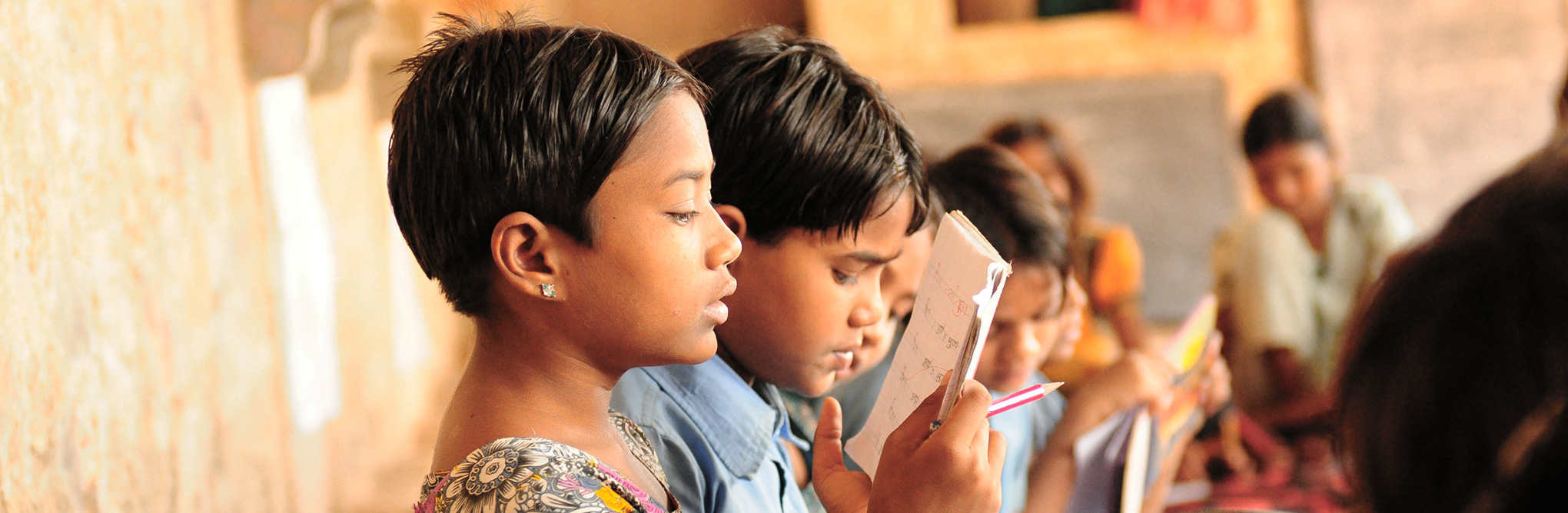
Project Brief: Sita school is an alternative school that tries to help each child reach it's potential through holistic, child centric education. The school has an emphasis on learning hands on and in art.
Project Type: Alternative Education (description)
Primary Focus: dropouts (description)
Supporting Chapter Contact:
Bangalore
Project Type: Alternative Education (description)
Primary Focus: dropouts (description)
Secondary Focus: other
Area: TribalSupporting Chapter Contact:
Bangalore
Status: CLOSED - ENDED
Project Steward: Aanchal Singh
Co-Steward: Manish Babladi
Project Partner(s): Jane Sahi
Project Address: Society for Educational Exploration - Sita School
Vishram,
Silvapura
Bangalore North, Karnataka 560090
Tel: 080-28466274
Stewarding Chapter: Bangalore
Project Steward: Aanchal Singh
Co-Steward: Manish Babladi
Project Partner(s): Jane Sahi
Project Address: Society for Educational Exploration - Sita School
Vishram,
Silvapura
Bangalore North, Karnataka 560090
Tel: 080-28466274
Stewarding Chapter: Bangalore
| Jul 2017 | Bangalore | INR 335000 |
| Jul 2016 | Bangalore | INR 340000 |
| Mar 2016 | Bangalore | INR 199000 |
| Oct 2014 | Bangalore | INR 330000 |
| Oct 2014 | Bangalore | INR 196000 |
| Apr 2014 | Bangalore | INR 196000 |
| Oct 2013 | Silicon Valley | USD 5287 |
| Aug 2013 | Bangalore | USD 2407 |
| Jan 2013 | Bangalore | INR 250000 |
| Nov 2012 | Bangalore | INR 159900 |
| Nov 2012 | Bangalore | INR 250000 |
| Aug 2012 | Bangalore | INR 161600 |
| Feb 2012 | Bangalore | USD 2555 |
| Jun 2011 | Bangalore | USD 6352 |
| Jan 2011 | Silicon Valley | INR 202000 |
| Jul 2010 | Bangalore | USD 7076 |
| Dec 2009 | Bangalore | USD 4391 |
| Jul 2009 | Silicon Valley | USD 1100 |
| Jul 2009 | Silicon Valley | USD 4165 |
| Dec 2008 | Bangalore | USD 3650 |
| May 2008 | Bangalore | USD 4375 |
Total = $2660858
The school was started in 1975 to try to address the problem of many local children not going to school and the fact that many children dropped out of school. The reasons were varied and included economic factors and lack of flexibility in mainstream schools to accommodate children with special needs. The schools also were not attractive to children and if parents were not motivated to send their children to school the children rapidly left.
The school is structured in a way that children can enter at any level and are encouraged to learn at their own pace without pressure of exams or fear of failure and disapproval. Literacy is only one aspect of education. Learning that fosters solely the growth of the intellect is often fundamentally disconnected with life and therefore, oppressive to children. Sita School tries to create an environment which stimulates the child not just intellectually, but also emotionally, creatively and socially. We try to draw on the feeling and imagination of the child in a broad non-sectarian and spiritual sense. We try to cultivate a sense of wonder, an appreciation of the beautiful and the healthy. At the same time, we actively cultivate cooperation, sharing and respect for the other and towards nature ad material things, to foster a just and balanced way of life.
<center><img width="300" src="http://www.ashanet.org/projects-new/documents/926/sita_img.gif"></center>
The school affords opportunities for many types of learning. In addition to language study, practical math, social studies and science, children learn clay work, tailoring, needlework, printing, first aid, food, health and home remedies, kitchen gardening. Theatre, art and craft lessons bring creativity into their learning experience. There has been a training in ceramics and screen printing but at present that is not functioning as a training center.
The school is structured in a way that children can enter at any level and are encouraged to learn at their own pace without pressure of exams or fear of failure and disapproval. Literacy is only one aspect of education. Learning that fosters solely the growth of the intellect is often fundamentally disconnected with life and therefore, oppressive to children. Sita School tries to create an environment which stimulates the child not just intellectually, but also emotionally, creatively and socially. We try to draw on the feeling and imagination of the child in a broad non-sectarian and spiritual sense. We try to cultivate a sense of wonder, an appreciation of the beautiful and the healthy. At the same time, we actively cultivate cooperation, sharing and respect for the other and towards nature ad material things, to foster a just and balanced way of life.
<center><img width="300" src="http://www.ashanet.org/projects-new/documents/926/sita_img.gif"></center>
The school affords opportunities for many types of learning. In addition to language study, practical math, social studies and science, children learn clay work, tailoring, needlework, printing, first aid, food, health and home remedies, kitchen gardening. Theatre, art and craft lessons bring creativity into their learning experience. There has been a training in ceramics and screen printing but at present that is not functioning as a training center.
a) To enrol those children who for socio-economic reasons or learning problems have not found a place in the educational mainstream.This includes occasional short term entry of children of migrant workers or children of uprooted or unstable families.
b) To foster the physical welfare of the children
c) To provide the children enrolled in a flexible structure whereby children can enter school at any stage and are then encouraged to learn at their own pace without the pressure of examinations or the fear of failure
d) To teach the children within the framework of a syllabus that has evolved throughout the years and which builds on and extends the child’s own experience and knowledge of the immediate environment and community. The emphasis is on practical work, observation, experimentation and mindful learning.
e) To give opportunities for many types of learning, including various types of crafts, gardening, drama etc.
f) To encourage cooperation
g) To prepare some children to enter the educational mainstream at the high school stage, and to enable others to acquire some basic life- skills to improve the quality of life as working adults
b) To foster the physical welfare of the children
c) To provide the children enrolled in a flexible structure whereby children can enter school at any stage and are then encouraged to learn at their own pace without the pressure of examinations or the fear of failure
d) To teach the children within the framework of a syllabus that has evolved throughout the years and which builds on and extends the child’s own experience and knowledge of the immediate environment and community. The emphasis is on practical work, observation, experimentation and mindful learning.
e) To give opportunities for many types of learning, including various types of crafts, gardening, drama etc.
f) To encourage cooperation
g) To prepare some children to enter the educational mainstream at the high school stage, and to enable others to acquire some basic life- skills to improve the quality of life as working adults
Jun 2017 June Plan for Learning Centre
Jan 2017 Revised Budget
Dec 2016 Site Visit 2016
Jul 2016 Buget_2016_17
Jul 2016 Progress_Report_2016
Dec 2014 Sita School Report - December 2014
Apr 2014 Budget for 2014- 2015
Apr 2014 Project Steward Site visit
Jan 2014 Sita School Report January 2014
Sep 2013 Sita School Report September 2013
Aug 2013 Sv Sita School Update 2013
May 2013 Budget 2013 - 2014
Mar 2013 Sita Update Aug 2012-March 2013
Dec 2012 Thoughts on RTE - Jane Sahi
Aug 2012 Budget for 2012-13
Jul 2012 Sita School Report June-July 2012
Mar 2012 Update Jan 2012 - Asha SV
Sep 2011 Updates for month of September
Aug 2011 Updates for month of August
Jun 2011 Budget for 2011-2012
Apr 2011 Report for Dec 2010 - April 2011
Mar 2011 Excerpt from Jane's Book
Feb 2011 Article on computer skills
Jan 2011 Sita School in Strides of Hope
Nov 2010 Report for June - November - 2010
Jul 2010 Budget for 2010-2011
Jun 2010 Petition by alt ed schools
Jun 2010 Jan to May 2010 - 6 month report
May 2010 Concerns on RTE
Apr 2010 Kamala's Fellowship report
Jan 2010 Sita_school_6month_report
Aug 2009 Visits: Santhosh - Heart Rate
Aug 2009 Visits: Santhosh - New Running Route
Aug 2009 Visits: Santhosh - Sun Dials
Aug 2009 Visits: Santhosh - Skeletal system
Aug 2009 Team Asha run @ Sita School
Jun 2009 SV eval doc
Apr 2009 Budget 2009 - 2010
Apr 2009 Asha SV presentation
Apr 2008 Chapter visit
Feb 2008 Project proposal
Jan 2008 Initial site visit